ABSTRACT
-
Objective
Obesity is a major global public health concern. Psychological stress has recently gained attention as a significant factor influencing the onset and progression of obesity. However, studies focusing on adult Asian populations are limited. We therefore conducted a scoping review to identify research trends and further directions in the association between stress and obesity among Asian adults.
-
Methods
A literature search was conducted using the PubMed, Scopus, and Research Information Sharing Service (RISS) databases, targeting studies published over the last 20 years. Finally, 12 studies examining the association between stress and obesity were included in the review.
-
Results
Most studies employed a cross-sectional design. Obesity was assessed using indicators such as body mass index, waist circumference, and body fat percentage, while stress was measured using structured or researcher-developed questionnaires, most commonly a single-item question and the Psychosocial Well-being Index–Short Form. Most studies reported associations between higher stress levels and increased body mass index or a higher obesity risk, particularly in women. However, conflicting or null results were also reported. These differences in results could be attributable to variations in sex, study design, and stress assessment tools. The potential underlying interaction between an individual’s physiological and lifestyle factors may also contribute to such inconsistencies, but limited studies have considered such an effect.
-
Conclusion
Stress is an important contributing factor to the etiology of obesity among Asian adults. Further longitudinal studies considering biological and socioeconomic factors are required for better obesity prevention, treatment, and quality of life.
-
Keywords: Asian; Body weight; Obesity; Psychological stress
INTRODUCTION
Obesity is a complex disease that cannot be explained simply by excessive energy intake or lack of physical activity. The persistent increase in obesity has emerged as a serious public health issue worldwide [
1]. Obesity is a major driver of poor health outcomes worldwide, contributing to chronic diseases such as type 2 diabetes and chronic kidney disease, and the disease burden attributable to high body mass index (BMI) has increased since 2010 [
2]. Therefore, obesity is not a simple matter of weight gain or appearance; it affects individual health and imposes a substantial public health burden [
2]. As a result, obesity is not an issue of individual lifestyle behaviors, but underscores the need for comprehensive research and policy interventions to address its prevention, treatment, and management [
2].
Obesity is a multifactorial disease resulting from independent or interactive effects of genetic predisposition, environment, and health behavior. Psychological stress has been identified as a factor associated with obesity [
3]. Exposure to physical or emotional stress may impair self-regulatory capacity in individuals with obesity, thereby promoting negative eating behaviors such as binge or emotional eating, which ultimately hinder effective weight control and long-term weight maintenance [
3]. Additionally, from a physiological perspective, stress activates the hypothalamic–pituitary–adrenal (HPA) axis, leading to increased cortisol secretion [
4]. Elevated cortisol levels are known to affect both the physiological and behavioral pathways of obesity by stimulating appetite and increasing the intake of highly palatable foods, and ghrelin and cortisol levels have been associated with food cravings and weight gain [
4]. Furthermore, stress is closely associated with health-risk behaviors, including reduced physical activity, poor sleep quality, smoking, and alcohol consumption. Given these factors, stress is considered a risk factor in the pathophysiology of obesity, not through a single pathway but through complex and interactive mechanisms [
5].
Several studies have investigated the association between stress and obesity. Earlier research has reported that high stress is associated with greater increases in BMI [
6] and an increase in obesity risk [
7,
8]. However, Wardle et al. [
9] reported that although psychosocial stress is a risk factor for weight gain, its effect size was relatively small. In addition, Rosengren et al. [
10] estimated the total effect of chronic stress after adjusting for potential confounders, including age, sex, physical activity, education, and region, and found no association with abdominal obesity. These findings indicate that the relationship between stress and body weight is not a simple correlation, but rather a complex pathological mechanism influenced by individual biological and lifestyle factors. Furthermore, most previous studies were conducted in Western or other non-Asian populations; consequently, evidence regarding Asian populations that differ in biological and cultural characteristics remains limited.
This scoping review examined the literature on the association between stress and obesity among Asian adults over the past 20 years using a systematic approach. This study aimed to inform future directions for research on stress and obesity by summarizing key aspects, such as study design, study populations, definitions, measurement markers and tools, and main findings.
METHODS
Ethics statement
This scoping review synthesized findings from previously published studies and did not involve direct recruitment of human participants or the collection of primary data. Accordingly, approval from an Institutional Review Board and the acquisition of informed consent were not applicable.
Study design
This scoping review was conducted in five steps in accordance with the methodological framework suggested earlier [
11] and reported according to the Preferred Reporting Items for Systematic Reviews and Meta-Analyses Extension for Scoping Reviews (PRISMA-ScR) guidelines (
Table S1).
Step 1: Identifying the research question
This study developed a research question to examine the association between stress and obesity among Asian populations. Accordingly, the guiding research question was as follows: What are the trends in studies analyzing the association between psychological stress and obesity among Asian adults, and what future research directions would better elucidate the relationship between stress and obesity?
Step 2: Identifying relevant studies
The literature search was conducted between May and June 2025 and targeted studies published over a 20-year period from 2005 to 2025 that examined the association between stress and obesity. To minimize missing studies, three electronic databases were searched: the Research Information Sharing Service (RISS) for Korean literature and PubMed and Scopus for other Asian studies. Searches across all three databases were performed using the following keywords, based on a previous study [
9]: (body weight OR BMI OR obesity OR waist OR abdominal fat OR body fat) AND (psychological stress OR psychosocial stress OR work stress OR life event OR life stress OR chronic stress OR social support) AND (Asian OR Korean OR Chinese OR Japanese).
Step 3: Study selection
The study selection process began by screening titles and abstracts of studies relevant to the research topic. Subsequently, the full texts of potentially eligible articles were independently reviewed by two researchers, and the final set of studies was selected.
The inclusion criteria were as follows: (1) observational studies, including cohort-based and population-based (cross-sectional) studies, identified through keyword searches conducted using three electronic databases (PubMed, Scopus, and RISS); (2) studies involving adult populations (aged 18 years or older) from Asian countries, including Korea, China, and Japan (country-specific terms were additionally included in the search strategy to maximize sensitivity, given that these countries account for a large proportion of the relevant literature; however, studies from other Asian countries meeting all inclusion criteria were also eligible); (3) studies reporting a statistically quantifiable association (e.g., P-value, odds ratio [OR], hazard ratio [HR], beta coefficient, or correlation coefficient) between psychological stress and obesity-related outcomes (e.g., overall obesity, abdominal obesity, BMI, or waist circumference [WC]), regardless of whether this association was the primary research aim of the study; and (4) written in English or Korean.
The exclusion criteria were as follows: (1) duplicate studies identified across the three electronic databases; (2) studies in which stress or obesity was not included as a primary variable; (3) studies for which full-text access was unavailable; (4) theses, dissertations, or non-peer-reviewed publications; (5) studies that did not report quantifiable statistical estimates for the association between stress and obesity; and (6) non-human studies, including animal and cellular experiments and intervention as well as experimental studies focusing on obesity mechanisms.
Step 4: Charting the data
After removing the duplicate records, the retrieved studies were screened using Rayyan, a web-based literature management and collaboration tool [
12]. Titles and abstracts were initially reviewed, and full-text articles were subsequently examined when eligibility could not be determined based on the titles and abstracts alone. The final list of included studies was determined by applying the predefined inclusion and exclusion criteria. Data were then extracted and charted into an Excel spreadsheet, including information on authors, publication year, study design, sample size, participant age, sex, country, data source, definitions, measurement indicators of stress and obesity, ORs, HRs, 95% confidence intervals (CIs), and P-values.
Step 5: Collating, summarizing, and reporting the results
Following the scoping review methodology, the included studies were systematically charted. The extracted data were then analyzed and synthesized to summarize the overall findings, and the results were reported in a structured manner to identify key patterns and research gaps.
RESULTS
Results of study selection
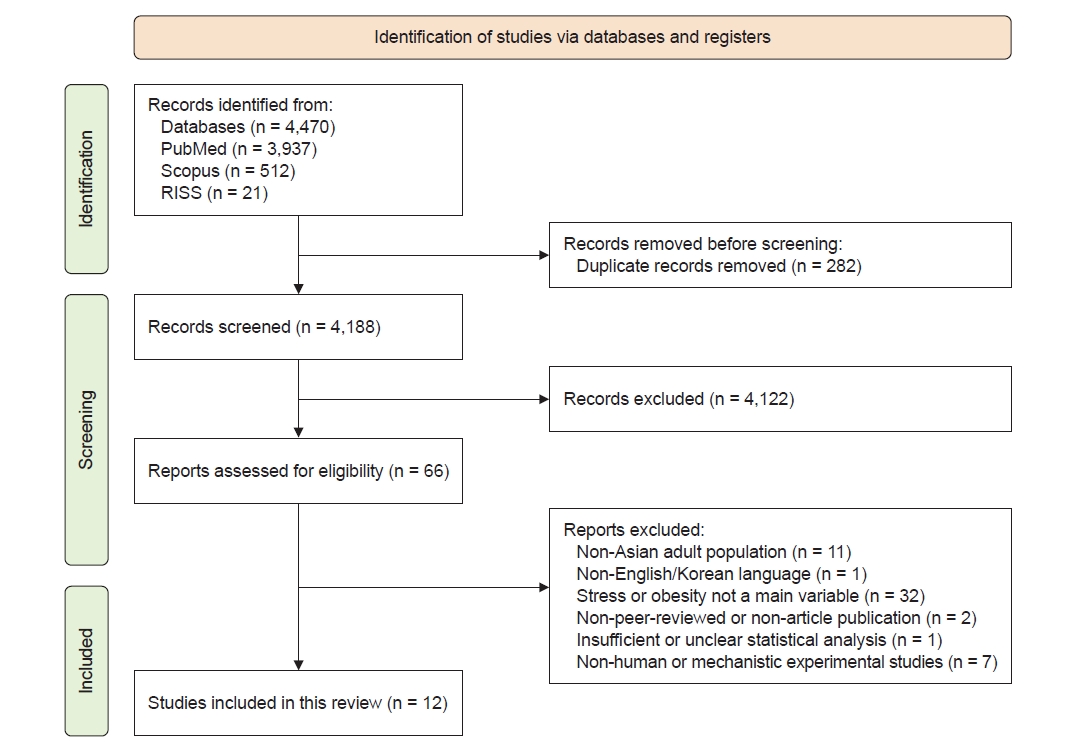
Using a predefined search strategy across three electronic databases (PubMed, Scopus, and RISS), 4,470 records published between 2005 and 2025 were identified to examine the relationship between psychological stress and obesity in Asian populations. After the removal of 282 duplicate records, the titles and abstracts of the remaining studies were screened. Of these, 4,122 articles were excluded because they did not include stress- or obesity-related indicators. Following a full-text review based on predefined inclusion and exclusion criteria, an additional 54 articles were excluded. Consequently, 12 studies were included in the review (
Table 1 and
Fig. 1) [
13-
24].
The characteristics of the included studies are summarized in
Table 2 [
13-
24]. The 12 studies included in this review were published between 2009 and 2023. Of these, six studies (50.0%) were published in the 2020s [
13-
18]. One study was published in 2022 and another in 2023 [
13,
16]. From 2019 to 2021, two studies were published each year [
14,
15,
17-
20], one was published in 2016 [
21], two were reported in 2015 [
22,
23], and one was published in 2009 [
24]. Overall, an increasing trend was observed in publications examining the association between stress and obesity.
Regarding study design, cross-sectional studies were the most prevalent, accounting for 10 studies (83.3%) [
13-
15,
17-
23]. In addition, one longitudinal study [
24] and one prospective cohort study were also included [
16]. By country, studies conducted in Korea accounted for the largest number, with seven studies (58.3%) [
15-
18,
20,
21,
23], followed by Japan with two studies [
22,
24], China with two studies [
13,
14], and India with one study [
19].
In general, studies have utilized data derived from large, well-structured cohorts or population-based survey datasets. Among the included studies, four Korean studies analyzed the Korea National Health and Nutrition Examination Survey (KNHANES), most commonly evident (33.3%) [
15,
17,
18,
23], followed by the Korean Genome and Epidemiology Study (KoGES), with three studies (25.0%) [
16,
20,
21]. A total of four studies utilized data from the China Healthcare Improvement Initiative (CHII), China Health and Nutrition Survey (CHNS), the Japan Multi-Institutional Collaborative Cohort (J-MICC), and the Aichi Government Employee Cohort (Aichi GEC Study), respectively [
13,
14,
22,
24]. Finally, one study employed primary data collected through a community-based survey conducted among residents of Gujarat, India [
19].
In terms of participants’ sex, the majority of studies (n=8) included both men and women (66.7%) [
13-
16,
18,
21-
23]. Three studies comprised women only (25.0%) [
17,
19,
20] while one study included men only (8.3%) [
24]. Overall, most studies incorporated participants of both sexes.
The 12 studies included in this review defined obesity or body weight using BMI, WC, percent body fat (PBF), and visceral adipose tissue (VAT). BMI was the primary obesity classification indicator for ten studies (83.3%) [
13-
15,
17-
19,
21-
24]. Five studies (41.7%) employed WC as the indicator of abdominal obesity [
14-
16,
20,
21]. Three studies used changes in body weight or BMI [
17,
18,
24]. Some studies used multiple markers for a more comprehensive evaluation of obesity: BMI, WC, PBF, VAT and changes in body weight and BMI [
14,
15,
17-
19,
21].
Among the 12 included studies, two studies (16.7%) applied the World Health Organization (WHO) Asia-Pacific obesity criteria (BMI ≥25 kg/m²) [
18,
21]. One study used the criteria of the Korean Society for the Study of Obesity (KSSO) [
16] which are consistent with the WHO Asia-Pacific guidelines (BMI ≥25 kg/m²). One study analyzing KNHANES data defined obesity according to the WHO criteria (BMI ≥30 kg/m²), but not the WHO Asia-Pacific obesity criteria or KSSO [
23]. One Chinese study applied the criteria of the Working Group on Obesity in China (BMI ≥24 kg/m² for overweight and ≥28 kg/m² for obesity), while another Chinese study used the two standards, the general WHO obesity criteria (BMI ≥30 kg/m²) and the Chinese one (BMI ≥28 kg/m²), independently [
13,
14]. Three studies did not explicitly report which obesity classification criteria were used [
17,
22,
24]; however, most studies classified obesity according to own nationally relevant standards.
Stress assessment tools varied across the studies. Six studies employed standardized instruments that allowed for the quantitative assessment and comparison of stress levels. Among these, three studies (25.0%) used the Psychosocial Well-being Index–Short Form (PWI-SF) [
16,
20,
21], one study applied the International Stress Management Association (ISMA) scale [
19], one study used a modified version of the Perceived Stress Scale (PSS-14) [
14], and one study utilized the Depression Anxiety Stress Scale (DASS-21) [
13]. In contrast, studies with KNHANES, J-MICC and Aichi GEC Study assessed the stress level from the single-item question from the survey questionnaire [
15,
17,
18,
22-
24].
Among the 12 included studies, some conducted subgroup analyses or considered lifestyle-related factors to examine the associations between obesity, BMI, body weight, and stress. Many studies examined specific types of obesity, including abdominal obesity [
14,
16], obesity phenotypes classified by metabolic health status [
15], weight changes in relation to stress [
17,
18,
24] and BMI changes in relation to stress coping strategies [
22]. In addition, some studies considered other mental health-related conditions and indicators such as quality of life [
15], suicidal ideation, depression, and anxiety [
13,
17,
18].
Relatively few studies considered the lifestyle-related factors of participants. Some studies incorporated food and nutrient intake, analyzed intake according to stress levels or examined obesity indicators related to dietary intake [
16,
19,
20]; however, only one study analyzed the effect of the interaction between stress and eating patterns on obesity indicators [
24]. Most studies were conducted among middle-aged and older populations, and only one study analyzed the association by age group, examining the relationship between obesity and stress in the overall sample, before separately analyzing participants in their 20s and 30s [
23].
As noted above, while the general characteristics and lifestyle-related factors of most study participants were included as covariates in the statistical models, relatively few studies used these factors to conduct subgroup analyses or to examine the interaction between stress and such factors. Furthermore, no study examined the interactions with obesity-related biological factors, including the microbiome, and genetic variations in known obesity risk genes such as
FTO or
MC4R, although one study examined the interactive effect of neuropeptide Y single nucleotide polymorphism and stress [
21].
Stress and increased obesity-related marker
Among the 12 studies included in this review, nine studies (75.0%) reported a significant association between stress and body-weight-related index [
14-
20,
23,
24]. Of these, six studies (50.0%) found a significant association between stress and increased BMI and obesity/overweight [
15,
17-
19,
23,
24]. These associations were predominantly observed among women, with higher stress levels associated with greater increases in BMI or a higher likelihood of being overweight or obese. In studies of Korean women, stress awareness was associated with a greater likelihood of weight gain (OR, 1.27; 95% CI, 1.01–1.60) [
18], and further, obese women exhibited significantly higher stress levels than non-obese women (OR, 1.28; P=0.028) [
23]. A study of Indian women found that participants with the highest stress level had significantly greater PBF, compared with women with lower and moderate stress levels (OR, 1.60; 95% CI, 1.48–1.69) [
19]. However, such a stress-obesity association was evident with differential magnitudes and trends regarding each study population’s characteristics. In a study of middle-aged Korean women, the association between stress and subsequent weight gain differed according to the obesity status. Among non-obese women, perceived stress levels were higher in those with a weight gain of more than 3 kg [
17]. In contrast, among Japanese men, the relationship between stress and obesity appeared to be influenced by dietary behaviors. In a study of Japanese male workers, the interaction between psychological stress and eating habits had a significant effect on BMI changes over a 5-year follow-up period (P for interaction=0.03). Among participants with a higher stress level, BMI gain was significantly higher in satiation eaters than in moderate eaters [
24].
Other findings on stress and obesity markers
In contrast, two studies reported no significant association between stress and BMI [
13,
22]. In a large cross-sectional study involving more than 12,000 Japanese adults, Shimanoe et al. [
22] reported that perceived stress levels were not significantly associated with BMI, but the stress coping strategies were associated with BMI. Similarly, Xie et al. [
13] reported no significant relationship between stress and overweight status in their analysis of Chinese endocrinologists.
Five studies (41.7%) examined or included the markers to confirm the association between stress and abdominal obesity [
14-
16,
20,
21], of which three studies (25.0%) reported decisive findings [
15,
16,
20]. Among middle-aged Korean women, higher stress levels were associated with an increased likelihood of metabolic syndrome, particularly abdominal obesity (OR, 1.06; 95% CI, 1.01–1.11; P=0.027) [
20]. Another study conducted in a Korean population demonstrated that stress significantly increased the risk of abdominal obesity (HR, 1.27; 95% CI, 1.00–1.59; P=0.047) [
16]. In addition, approximately 30% higher odds of experiencing stress were reported among Korean individuals with obesity, regardless of metabolic health status, whereas no such association was noted among those with metabolic abnormalities alone (without obesity) [
15]. However, contrary to the findings of most studies, Tan et al. reported an inverse association in Chinese adults, that higher levels of perceived stress were associated with lower WC (OR, 0.73; 95% CI, 0.61–0.88) [
14].
DISCUSSION
This scoping review examined research trends over the past 20 years regarding the association between psychological stress and obesity among Asian populations. Although the direction and strength of the association varied across studies, the overall findings suggest that higher levels of psychological stress may be associated with an increased risk of obesity and weight gain. This association was more consistently observed among women.
More than half of the reviewed studies reported a statistically significant association, suggesting a meaningful link between stress and obesity. Stress activates the HPA axis, leading to the release of corticotropin-releasing hormone (CRH) from the hypothalamus. CRH subsequently stimulates the pituitary gland to secrete adrenocorticotropic hormone that promotes the release of cortisol (a glucocorticoid) from the adrenal cortex. Elevated cortisol levels further enhance gluconeogenesis in the liver, increase protein catabolism in skeletal muscle, and promote fat redistribution in the adipose tissue. Through these mechanisms, chronic cortisol exposure may contribute to dysregulated energy metabolism and an increased risk of metabolic disorders [
25]. Sustained activation of the HPA axis induced by chronic psychological stress can impair the sensitivity of negative feedback regulation, resulting in persistently elevated cortisol secretion. Prolonged cortisol exposure promotes obesity through physiological pathways, including impaired appetite regulation, increased energy intake, and weight gain [
4]. Furthermore, the relationship between psychological stress and weight gain may be indirectly mediated by behavioral factors. Psychological conditions such as depressive symptoms partially mediate weight gain through emotional eating. Emotional eating is frequently adopted as a coping strategy in response to negative feelings induced by depressive symptoms, thereby functioning as a mediating mechanism that links psychological stress to long-term changes in BMI and WC [
26]. In addition, depression is associated with behavioral changes including reduced physical activity and poor sleep quality, which may further contribute to emotional eating and, ultimately, weight gain [
27].
Altered eating behavior may be an important pathway linking stress to obesity. Stress has been associated with changes in appetite-related hormones, food cravings, and eating driven by the reward system [
4,
28]. Consistent with this, among the included studies, higher stress was associated with higher refined grain intake and lower fruit intake in both sexes, and with lower dietary variety in women [
16]; in addition, the interaction between stress and satiation eating (eating until satiety) on BMI gain remained significant after adjusting for energy intake [
24]. These findings suggest that, in nutritional care for obesity, it may be beneficial to assess stress alongside dietary habits and to address dietary quality and eating patterns, such as emotional eating and eating until satiety, through behavioral counseling.
Nevertheless, some studies have reported no association between stress and obesity, or even an inverse relationship, highlighting the heterogeneity across findings. A similar pattern has been reported in a meta-analysis of 14 cohorts, mainly from Europe and the United States, in which 69% of the analyses showed no significant association between stress and adiposity, and among those with significant results, positive associations were more common than negative ones; the pooled effect was positive but very small (r=0.014) [
9]. The effect was stronger in men than in women [
9], whereas the association was more consistently observed among women in the studies included in this review. In addition, stress in those cohorts was assessed mainly as general life stress or work stress [
9], whereas most studies included in this review used global self-reported stress, most commonly a single-item question. Such variability may partly reflect the very small effect size [
9], and in the included studies, differences in stress and adiposity measurement, study design, and sex-specific effects may also have contributed. For instance, Tan et al. [
14] suggested that inverse association they observed may be related to differences in ethnic or socioeconomic factors associated with weight control and health-related behaviors in response to stress. Similarly, Xie et al. [
13] found no significant association between stress and overweight, attributing this result to the characteristics of a specific occupational group, endocrinologists, who may possess higher levels of health awareness. Shimanoe et al. [
22] proposed that behavioral coping responses to stress, rather than perceived stress levels, may be more closely related to BMI. Additionally, perceived stress can modify individuals’ eating behaviors. Taken together, these inconsistencies may be explained by differences in the biological and socioeconomical backgrounds of the study populations, variations in eating behaviors and weight change patterns under stress, as well as heterogeneity in stress assessment tools and analytical approaches.
The studies included in this review employed a range of stress assessment instruments including the PWI-SF, ISMA scale, PSS-14, and DASS-21. Other studies, in contrast, asked a single question regarding the presence of perceived stress. Such heterogeneity in the measurement tools may also complicate the interpretation and comparability of the study findings. Because each instrument is established in a distinct theoretical framework and emphasizes different dimensions of stress, varying results may be observed, even when assessing similar levels of stress. For instance, the PWI-SF indirectly evaluates stress by focusing on psychosocial distress and overall emotional and somatic symptoms [
29], whereas the ISMA measures individuals’ responses to various situations, including external and imagined events, and the resulting adverse psychological conditions [
19]. By contrast, the PSS-14 emphasizes individuals’ cognitive appraisal of stressful situations [
30], whereas the DASS-21 distinguishes emotional responses related to depression, anxiety, and stress [
31]. Given these differences in conceptual focus and measurement perspectives, a direct comparison or synthesis of findings across studies is inherently limited. Therefore, future research should prioritize the use of standardized and validated stress assessment tools or adopt common measurement indicators to enhance cross-study comparability, while acknowledging the potential variability in research outcomes.
Given these findings, future research should consider the following: First, to more clearly elucidate the causal relationship between psychological stress and obesity, it is better to use longitudinal study designs because existing studies mostly rely on cross-sectional data, which limits the interpretation of causality. Second, appropriate and standardized criteria and measurement tools for assessing stress and obesity in each study population would enhance the comparability of findings across studies. Third, because assessments based solely on subjective self-report questionnaires are highly dependent on individual perception, the concurrent use of physiological indicators, such as cortisol levels or heart rate variability, may allow for a more objective evaluation of stress. These biomarkers reflect the physiological burden of stress and may capture the biological effects that are not fully assessed using survey-based measures [
32]. Finally, studies that incorporate genetic factors are needed to examine the association between stress and obesity among Asian adults. Research investigating the interaction between stress and obesity-related genes, genes related to HPA axis regulation, microbiome, medication, and environmental stressors could provide a critical foundation for the development of personalized obesity prevention and intervention strategies.
This study has several limitations. First, in line with the framework of scoping reviews [
11], which aims to map the extent and nature of the available evidence rather than to evaluate its quality, a formal quality appraisal of the included studies was not conducted. Therefore, the findings should be interpreted as a descriptive overview, and caution is warranted given the heterogeneity of methodological approaches and study designs across the reviewed literature. Future systematic reviews or meta-analyses incorporating formal quality appraisal are warranted. Second, because only published studies were included, unpublished research or studies reporting null or negative findings may have been omitted, which could have introduced publication bias. Third, only studies published in English and Korean were included in this review; studies published in other languages, along with their findings, may have been missed.
CONCLUSION
Obesity remains a major global public health challenge and a key underlying condition for numerous chronic degenerative diseases. Recent studies investigating the association between stress and obesity have suggested that psychological stress may contribute to obesity and body weight gain; however, the precise nature of this association remains poorly understood. Therefore, future research adopting comprehensive, integrative frameworks is warranted to better elucidate the relationship between psychological stress and obesity and to inform its prevention and management.
NOTES
-
Author Contributions
Conceptualization: JHC. Data curation: JHC, HIK. Formal analysis: JHC, HIK. Investigation: JHC, HIK. Methodology: JHC, HIK. Supervision: JHC. Validation: JHC, HIK. Visualization: JHC, HIK. Writing - original draft: JHC, HIK. Writing - review & editing: JHC. All authors read and approved the final manuscript.
-
Conflict of Interest
Jeong-Hwa Choi is an editorial board member of this journal, but was not involved in the peer reviewer selection, evaluation, or decision process of this article. No other potential conflict of interest relevant to this article was reported.
-
Funding
None.
-
Data availability
This scoping review did not generate new primary data. All data analyzed were extracted from previously published studies.
Supplementary materials
Fig. 1.Flowchart of literature selection for the present scoping review. RISS, Research Information Sharing Service.
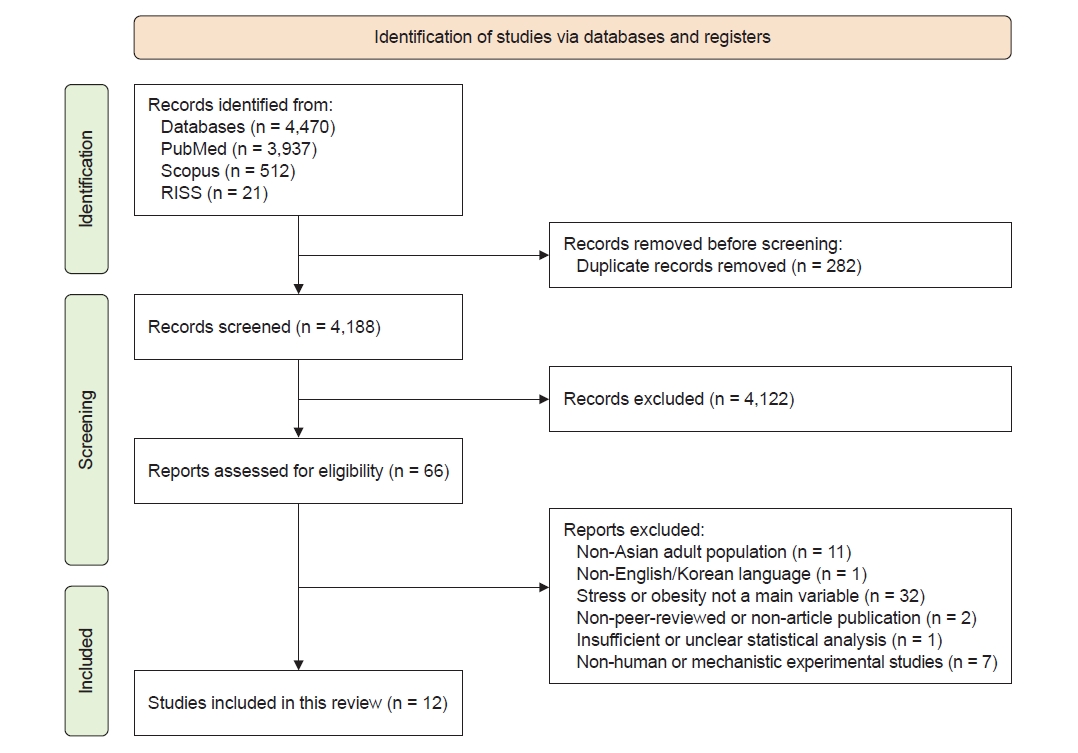
Table 1.Summary table of studies examining in this scoping review
Table 1.
|
Author (year) |
Study design |
Country |
Data source |
Sample size (n) |
Age (yr)a)
|
% Male |
Stress assessment tools |
Source of obesity criteria |
Obesity cutoff points |
Findings |
|
Xie et al. (2023) [13] |
Cross-sectional |
China |
CHII |
679 |
39.6±8.5 |
25.6 |
DASS-21 |
WGOC |
BMI ≥24 kg/m² (overweight) |
No significant association between stress and overweight in both sexes. |
|
Tan et al. (2021) [14] |
Cross-sectional |
China |
CHNS |
8,385 |
53.9±14.1 |
47.8 |
PSS-14 |
WHO and NHFPC |
BMI ≥30/28 kg/m²; M: WC ≥102/90 cm; W: WC ≥88/85 cm |
Inverse associations between perceived stress quintiles with continuous BMI and WC. The highest stress group had lower mean BMI, the prevalence of obesity and abdominal obesity. |
|
Kim et al. (2020) [15] |
Cross-sectional |
South Korea |
KNHANES |
6,057 |
43.9–53.2 |
43.4–58.9 |
Single-itemb)
|
WHO-WPRO |
BMI ≥25 kg/m²; M: WC ≥90 cm; W: WC ≥85 츠 |
Obesity subtypes were associated with the stress (MHO: OR=1.27; 95% CI, 1.05–1.54; MAO: OR=1.33; 95% CI, 1.11–1.60). |
|
Kim and Kim (2022) [16] |
Prospective cohort (10-yr follow-up) |
South Korea |
KoGES Ansan-Ansung cohort |
4,411 |
53.8–55.9 |
55.3 |
PWI-SF |
KSSO |
M: WC ≥90 cm; W: WC ≥85 cm |
At baseline, higher stress was associated with lower BMI and WC in M, and lower BMI in W. W: stress was associated with increased risk of abdominal obesity (HR=1.27; 95% CI, 1.00–1.59). |
|
Jung et al. (2021) [17] |
Cross-sectional |
South Korea |
KNHANES |
2,964 |
49.1±1.0 |
0 |
Single-itemb)
|
Not reported |
BMI ≥25 kg/m²; Weight change (more than ±3 kg) |
Obesity was not associated with stress, but weight gain was linked to higher stress, significant in non-obese only (P<0.001) |
|
Jang et al. (2020) [18] |
Cross-sectional |
South Korea |
KNHANES |
3,163 |
36.4–44.3 |
40.4 |
Single-itemb)
|
WHO Asia-Pacific criteria |
BMI ≥25 kg/m²; Weight gain (≥3 kg) |
W: Stress was significantly associated with weight gain (OR=1.27; 95% CI, 1.01–1.60); M: not significant. |
|
Patel et al. (2019) [19] |
Cross-sectional |
India |
Community-based survey (Gujarat, India) |
605 |
34±8 |
0 |
ISMA |
WHO Asian |
BMI ≥25 kg/m²; PBF >39% |
High stress was associated with higher PBF (OR=1.60; 95% CI, 1.48–1.69). |
|
Byeon et al. (2019) [20] |
Cross-sectional |
South Korea |
KoGES |
81,629 |
51.1–51.4 |
0 |
PWI-SF |
WHO Asia-Pacific criteria |
WC ≥80 cm |
High stress was associated with an increased risk of abdominal obesity (OR=1.06; 95% CI, 1.01–1.11). |
|
Kim et al. (2016) [21] |
Cross-sectional |
South Korea |
KoGES |
1,468 |
56.36±7.38 |
61.7 |
PWI-SF |
WHO Asia-Pacific criteria |
BMI ≥25 kg/m²; M: WC ≥90 cm; W: WC ≥80 cm; VAT ≥100 cm² (visceral) |
No association between stress, NPY SNP and obesity marker, respectively. But SNP × stress interaction was associated with BMI. |
|
Shimanoe et al. (2015) [22] |
Cross‑sectional |
Japan |
J‑MICC |
12,045 |
40–69 |
42.0 |
Single-itemb)
|
Not reported |
BMI ≥25 kg/m² |
No associations between stress and BMI, but coping strategies are associated with BMI. M: Positive reappraisal: β (SE)=0.12 (0.06), P=0.04; Problem solving: β (SE)=0.18 (0.07), P=0.007; Disengagement: β (SE)= –0.20 (0.06), P<0.001. |
|
Mak et al. (2015) [23] |
Cross‑sectional |
South Korea |
KNHANES |
15,019 |
39.5±10.0 |
43.6 |
Single-itemb)
|
WHO |
BMI ≥30 kg/m² |
W: Obese women were more report higher stress level and overall and younger group (OR=1.28, P=0.028; OR=1.47, P<0.05). M: Not significant. |
|
Toyoshima et al. (2009) [24] |
Longitudinal (5-yr follow-up) |
Japan |
Aichi Government Employee Cohort |
1,080 |
46.6±4.1 |
100 |
Single-itemb)
|
Not reported |
ΔBMI |
Regardless of stress level, satiation eaters had significantly higher BMI (P<0.001). The 5-yr ΔBMI was significantly greater in satiation eaters only within the high-stress group (P=0.002). An interaction between stress and eating pattern existed (P=0.03). |
Table 2.Distribution of the included studies by key characteristics
Table 2.
|
Category |
Subcategory |
No. of studies |
References |
|
Year |
2009 |
1 |
24
|
|
2015 |
2 |
22, 23
|
|
2016 |
1 |
21
|
|
2019 |
2 |
19, 20
|
|
2020 |
2 |
15, 18
|
|
2021 |
2 |
14, 17
|
|
2022 |
1 |
16
|
|
2023 |
1 |
13
|
|
Study design |
Cross-sectional |
10 |
13-15, 17-23
|
|
Prospective cohort |
1 |
16
|
|
Longitudinal |
1 |
24
|
|
Country/Region |
South Korea |
7 |
15-18, 20, 21, 23
|
|
China |
2 |
13, 14
|
|
Japan |
2 |
22, 24
|
|
India |
1 |
19
|
|
Data source |
KNHANES |
4 |
15, 17, 18, 23
|
|
KoGES |
3 |
16, 20, 21
|
|
CHII |
1 |
13
|
|
CHNS |
1 |
14
|
|
J-MICC |
1 |
22
|
|
Aichi GEC |
1 |
24
|
|
Community-based survey |
1 |
19
|
|
Sex composition |
Both men and women |
8 |
13-16, 18, 21-23
|
|
Women only |
3 |
17, 19, 20
|
|
Men only |
1 |
24
|
|
Obesity measures |
BMI |
10 |
13-15, 17-19, 21-24
|
|
WC |
5 |
14-16, 20, 21
|
|
VAT |
1 |
21
|
|
PBF |
1 |
19
|
|
Δ body weight or BMI |
3 |
17, 18, 24
|
|
Stress assessment tools |
Single-itema)
|
6 |
15, 17, 18, 22-24
|
|
PWI-SF |
3 |
16, 20, 21
|
|
DASS-21 |
1 |
13
|
|
PSS-14 |
1 |
14
|
|
ISMA |
1 |
19
|
REFERENCES
- 1. Lin X, Li H. Obesity: epidemiology, pathophysiology, and therapeutics. Front Endocrinol (Lausanne) 2021;12:706978.
- 2. GBD 2023 Disease and Injury and Risk Factor Collaborators. Burden of 375 diseases and injuries, risk-attributable burden of 88 risk factors, and healthy life expectancy in 204 countries and territories, including 660 subnational locations, 1990-2023: a systematic analysis for the Global Burden of Disease Study 2023. Lancet 2025;406:1873-922.
- 3. Korean Society for the Study of Obesity. Clinical practice guidelines for the management of obesity in Korea. 9th ed. Korean Society for the Study of Obesity. 2024.
- 4. Chao AM, Jastreboff AM, White MA, Grilo CM, Sinha R. Stress, cortisol, and other appetite-related hormones: prospective prediction of 6-month changes in food cravings and weight. Obesity (Silver Spring) 2017;25:713-20.
- 5. Yoon ES, So WY, Jang S. Association between perceived psychological stress and exercise behaviors: a cross-sectional study using the Survey of National Physical Fitness. Life (Basel) 2023;13:2059.
- 6. Harding JL, Backholer K, Williams ED, et al. Psychosocial stress is positively associated with body mass index gain over 5 years: evidence from the longitudinal AusDiab study. Obesity (Silver Spring) 2014;22:277-86.
- 7. Cuevas AG, Chen R, Thurber KA, Slopen N, Williams DR. Psychosocial stress and overweight and obesity: findings from the Chicago Community Adult Health Study. Ann Behav Med 2019;53:964-74.
- 8. Eik-Nes TT, Tokatlian A, Raman J, Spirou D, Kvaloy K. Depression, anxiety, and psychosocial stressors across BMI classes: a Norwegian population study: the HUNT Study. Front Endocrinol (Lausanne) 2022;13:886148.
- 9. Wardle J, Chida Y, Gibson EL, Whitaker KL, Steptoe A. Stress and adiposity: a meta-analysis of longitudinal studies. Obesity (Silver Spring) 2011;19:771-8.
- 10. Rosengren A, Teo K, Rangarajan S, et al. Psychosocial factors and obesity in 17 high-, middle- and low-income countries: the Prospective Urban Rural Epidemiologic study. Int J Obes (Lond) 2015;39:1217-23.
- 11. Arksey H, O'Malley L. Scoping studies: towards a methodological framework. Int J Soc Res Methodol 2005;8:19-32.
- 12. Ouzzani M, Hammady H, Fedorowicz Z, Elmagarmid A. Rayyan-a web and mobile app for systematic reviews. Syst Rev 2016;5:210.
- 13. Xie F, Jiang L, Liu Y, et al. Gender differences in the associations between body mass index, depression, anxiety, and stress among endocrinologists in China. BMC Psychol 2023;11:116.
- 14. Tan T, Leung CW. Associations between perceived stress and BMI and waist circumference in Chinese adults: data from the 2015 China Health and Nutrition Survey. Public Health Nutr 2021;24:4965-74.
- 15. Kim SR, Kim HN, Song SW. Associations between mental health, quality of life, and obesity/metabolic risk phenotypes. Metab Syndr Relat Disord 2020;18:347-52.
- 16. Kim M, Kim Y. Psychosocial stress accompanied by an unhealthy eating behavior is associated with abdominal obesity in Korean adults: a community-based prospective cohort study. Front Nutr 2022;9:949012.
- 17. Jung KI, Ock SM, Song CH. Weight change and mental health according to obesity in relatively healthy middle-aged Korean women: the Korea National Health and Nutrition Examination Survey 2014, 2016, 2018. J Affect Disord 2021;287:174-81.
- 18. Jang HJ, Kim BS, Won CW, Kim SY, Seo MW. The relationship between psychological factors and weight gain. Korean J Fam Med 2020;41:381-6.
- 19. Patel PA, Patel PP, Chiplonkar SA, Patel AD, Khadilkar AV. Association of body fat with stress levels and dietary intakes in Indian women. Women Health 2019;59:591-600.
- 20. Byeon S, Shin Y, Yoon J, Kim S, Kim Y. Stress is associated with nutritional intake and metabolic syndrome in urban middle-aged women. J Korean Soc Food Sci Nutr 2019;48:802-10.
- 21. Kim HJ, Min KB, Min JY. Neuropeptide Y gene-by-psychosocial stress interaction effect is associated with obesity in a Korean population. Psychoneuroendocrinology 2016;69:10-5.
- 22. Shimanoe C, Hara M, Nishida Y, et al. Perceived stress and coping strategies in relation to body mass index: cross-sectional study of 12,045 Japanese men and women. PLoS One 2015;10:e0118105.
- 23. Mak KK, Kim DH, Leigh JP. Sociodemographic differences in the association between obesity and stress: a propensity score-matched analysis from the Korean National Health and Nutrition Examination Survey (KNHANES). Nutr Cancer 2015;67:804-10.
- 24. Toyoshima H, Masuoka N, Hashimoto S, et al. Effect of the interaction between mental stress and eating pattern on body mass index gain in healthy Japanese male workers. J Epidemiol 2009;19:88-93.
- 25. Herman JP, McKlveen JM, Ghosal S, et al. Regulation of the hypothalamic-pituitary-adrenocortical stress response. Compr Physiol 2016;6:603-21.
- 26. Konttinen H, van Strien T, Mannisto S, Jousilahti P, Haukkala A. Depression, emotional eating and long-term weight changes: a population-based prospective study. Int J Behav Nutr Phys Act 2019;16:28.
- 27. Zhou J, Chen Y, Ji S, et al. Sleep quality and emotional eating in college students: a moderated mediation model of depression and physical activity levels. J Eat Disord 2024;12:155.
- 28. Adam TC, Epel ES. Stress, eating and the reward system. Physiol Behav 2007;91:449-58.
- 29. Jang SJ. Standardization of health statistical data and measurement. The Korean Society for Preventive Medicine; 2000.
- 30. Cohen S, Kamarck T, Mermelstein R. A global measure of perceived stress. J Health Soc Behav 1983;24:385-96.
- 31. Lovibond PF, Lovibond SH. The structure of negative emotional states: comparison of the Depression Anxiety Stress Scales (DASS) with the Beck depression and anxiety inventories. Behav Res Ther 1995;33:335-43.
- 32. Cvijetic S, Keser I, Jurasovic J, et al. Diurnal salivary cortisol in relation to body composition and heart rate variability in young adults. Front Endocrinol (Lausanne) 2022;13:831831.