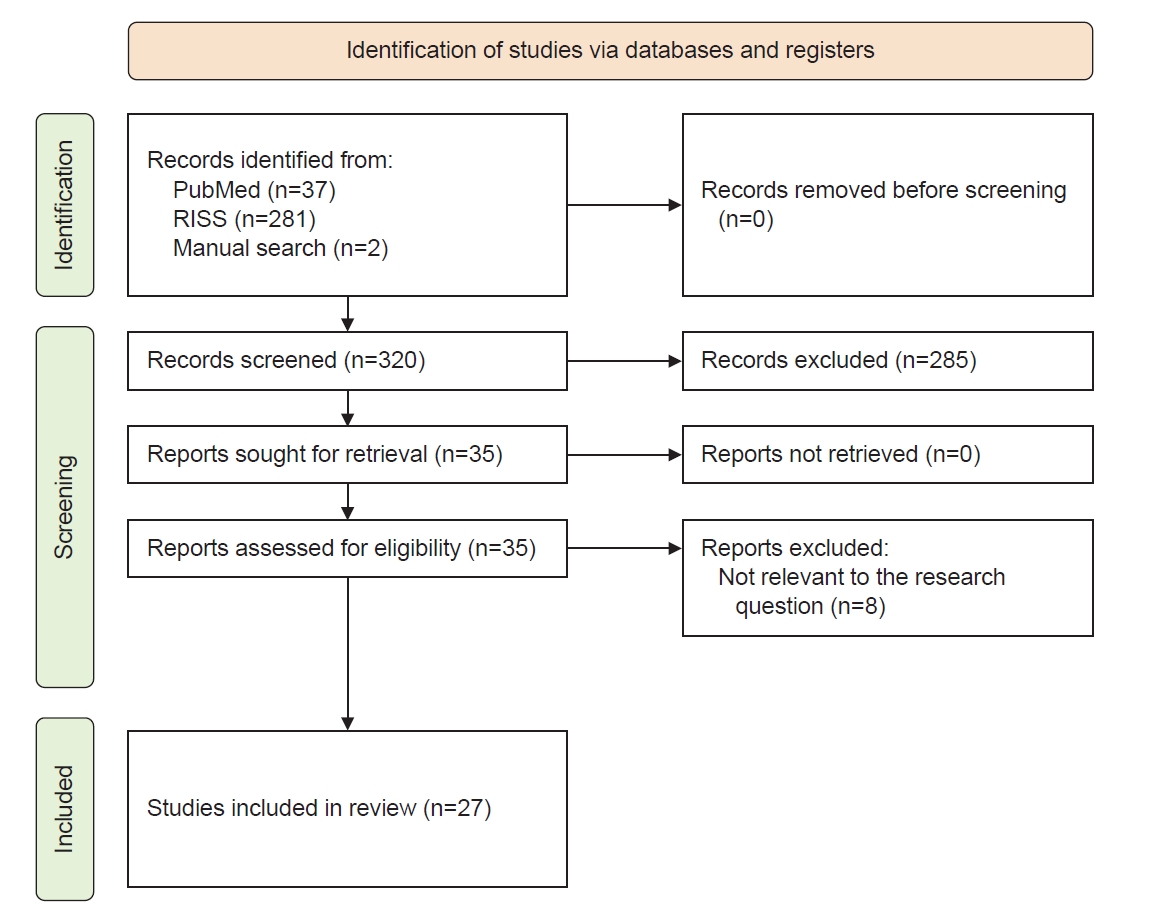


1Department of Practical Science Education, Gyeongin National University of Education, Incheon, Korea
2Department of Food and Nutrition, Institute of Agriculture and Life Science, Gyeongsang National University, Jinju, Korea
© 2026 The Korean Society of Clinical Nutrition
This is an Open Access article distributed under the terms of the Creative Commons Attribution Non-Commercial License (http://creativecommons.org/licenses/by-nc/4.0) which permits unrestricted non-commercial use, distribution, and reproduction in any medium, provided the original work is properly cited.
Author Contributions
Conceptualization: YK, YML. Data curation: YK, YML. Formal analysis: YK, YML. Investigation: YK, YML. Methodology: YK, YML. Supervision: YK, YML. Validation: YK, YML. Visualization: YK, YML. Writing - original draft: YK, YML. Writing - review & editing: YK, YML. All authors read and approved the final manuscript.
Conflict of Interest
Yoona Kim is an editorial board member of this journal, but was not involved in the peer reviewer selection, evaluation, or decision process of this article. No other potential conflict of interest relevant to this article was reported.
Funding
This work was supported by the Gyeongsang National University Fund for Professors on Sabbatical Leave, 2025.
Data availability
Not applicable.
| Author (year) | Database | Data name | Study type | No. of subjects | Sex of subjects | Age of subjects (yr) | NCDs | Outcomes | Implication |
|---|---|---|---|---|---|---|---|---|---|
| Lee and Lee (2016) [16] | RISS | KNHANES 2014 | CS | 6,266 | M (43%) | ≥10 | Obesity | Associations between food labeling use and women, age, income, education level, weight control and subjective obesity were observed. | Nutrition education, including food selection and body image correction, should be provided to obese people who do not use food labeling. |
| F (57%) | |||||||||
| Choi and Kim (2020) [15] | PubMed/ MEDLINE | KNHANES 2016 | CS | 1,443 | Postmenopausal women | ≥40 | Obesity | Lower recognition of nutrition labeling (3.6%) was observed in postmenopausal women with abdominal obesity. | Nutrition intervention programs are required to increase nutrition labeling recognition rates in abdominally obese menopausal women. |
| Lee and Shin (2021) [13] | PubMed/ MEDLINE | KCHS 2015–2017 | CS | 642,677 | M (42.2%) | ≥19 | Obesity, hypertension, and diabetes | An association of low nutrition labeling use with risk of obesity, hypertension, and diabetes was observed in subjects living alone in rural areas. | Various regional nutrition policies are implemented to reduce regional health gaps among single-person households. |
| F (57.8%) | An association between not recognizing nutrition labeling and diabetes risk was observed among rural and metropolitan residents. | ||||||||
| Chae and Park (2022) [14] | PubMed/ MEDLINE | KNHANES 2013–2018 | CS | 4,603 | M (45.6%) | 19–29 | Obesity | Nutrition labeling was used less in both men and women who subjectively recognized their bodies as obese. | Nutrition education interventions are needed to promote the use of nutrition labeling based on nutritional knowledge. |
| F (54.4%) | |||||||||
| Kim et al. (2017) [19] | PubMed/ MEDLINE | KNHANES 2007–2009 | CS | 3,869 | M (100%) | ≥20 | MS | A lower risk of MS was observed in male users of nutrition labeling. | Awareness and utilization of nutrition labeling are required for MS management. |
| F (0%) | |||||||||
| Jin et al. (2019) [18] | PubMed/ MEDLINE | KNHANES 2007–2015 | CS | 41,667 | M (46.5%) | ≥20 | MS | Increased MS risk was observed among subjects without nutrition labeling use compared with those with it. | Nutrition labeling education is required for MS management. |
| F (53.5%) | |||||||||
| Cho et al. (2021) [17] | PubMed/ MEDLINE | KNHANES 2016–2018 | CS | 14,490 | M (42.1%) | ≥20 | MS | An increased risk of MS was observed in subjects with unawareness of nutrition labeling compared with subjects using nutrition labels. | Nutrition labeling utilization should be promoted for MS management. |
| F (57.9%) | |||||||||
| Kwak et al. (2022) [20] | RISS | KNHANES 2019 | CS | 4,981 | M (50.8%) | 19–65 | MS | An association between high use of nutrition labeling and lower prevalence of MS was observed. | A nutrition program is required to increase the use rate of nutrition labeling for MS prevention and management. |
| F (49.2%) |
| Author (year) | Database | Data name | Study type | No. of subjects | Sex of subjects | Age of subjects (yr) | NCDs | Outcomes | Implication |
|---|---|---|---|---|---|---|---|---|---|
| Han et al. (2018) [26] | PubMed/ MEDLINE | KNHANES 2010–2015 | CS | 26,914 | M (40.9%) | ≥20 | Chronic disease (hypertension, or dyslipidemia, or diabetes) | An association between active use of nutrition labeling and high self-management was observed among subjects with chronic disease. | Food and nutrition policy, including enhanced nutrition labeling, is necessary to support informed food purchasing decisions. |
| F (59.1%) | |||||||||
| Won and Han (2019) [24] | RISS | KNHANES 2013–2015 | CS | 6,185 | M (43%) | 18–65 | Hypertension | The hypertensive group who did not exercise and did not use nutrition labeling consumed more fat and sodium. | It is necessary to expand customized education tailored to the lifestyles of subjects with hypertension. |
| F (57%) | |||||||||
| An et al. (2020) [23] | RISS | KNHANES 2016–2018 | CS | 4,862 | M (30.2%) | ≥19 | Hypertension and diabetes | The effect of nutrition education on nutrition labeling was not significant. | Systematic and specific nutrition education should be conducted according to the target and necessity. |
| F (69.8%) | Subjects with hypertension did not carefully check nutrition labeling. | ||||||||
| Han (2022) [25] | RISS | KCHS 2019 | CS | 925 | M (70.9%) | 40–79 | Hypertension and diabetes | 55.1% of diabetic subjects did not receive diabetes management. | A nutrition program is required for young individuals with diabetes and hypertension. |
| F (29.1%) | 62.7% of diabetic subjects could read nutrition labeling. | ||||||||
| Jin et al. (2023) [21] | RISS | KCHS 2018 | CS | 74,283 | M (45%) | ≥19 | Hypertension or diabetes | Higher utilization of nutrition labeling was observed among subjects with experience in walking exercise and in disease management education. | Nutrition labeling education is required as a dietary management tool to select healthy food. |
| F (55%) | |||||||||
| Park (2025) [22] | RISS | KNHANES 2023 | CS | 5,293 | M (43.2%) | ≥30 | Hypertension | Associations were observed between nutrition labeling awareness and breakfast frequency, walking days, and muscle strength days. | Nutrition labeling utilization can contribute to NCD prevention. |
| F (56.8%) | An inverse association between awareness of nutrition labeling and hypertension incidence was observed. | ||||||||
| Kim et al. (2016) [27] | PubMed/ MEDLINE | KNHANES 2010–2014 | CS | 17,687 | M (41.6%) | ≥30 | Dyslipidemia | Low TC, low TG, high HDL-C, and low LDL-C were observed among subjects with high nutrition labeling awareness. | Food and nutrition policy for high nutrition labeling awareness is required for dyslipidemia management. |
| F (58.4%) | Lower dyslipidemia diagnosis was observed in subjects with a higher awareness of nutrition labeling compared with those who did not. | ||||||||
| Kye et al. (2020) [28] | PubMed/ MEDLINE | KNHANES 2013–2018 | CS | 16,619 | M (49.5%) | ≥19 | Dyslipidemia | High HDL-C and low TG levels were observed in subjects who correctly recognized their body image when they actively used nutrition labeling. | Tailored intervention strategies considering individual body-size perception are required. |
| F (50.5%) | |||||||||
| Han et al. (2018) [34] | PubMed/ MEDLINE | KNHANES 2015 | CS | 2,931 | M (43.7%) | ≥30 | IR | Lower HOMA-IR scores were associated with the use of nutrition labeling. | High levels of nutrition labeling awareness and utilization are required for T2DM management. |
| F (56.3%) | |||||||||
| Joo et al. (2020) [32] | PubMed/ MEDLINE | KNHANES 2016–2017 | CS | 487 | M (56.3%) | ≥30 | Diabetes | An association between renal function loss and food labeling unawareness was observed only in men with diabetes was observed. | Nutrition education interventions are required to increase food labeling awareness in men with diabetes. |
| F (43.7%) | An association between renal function loss and food labeling unawareness in socially isolated men with diabetes. | ||||||||
| Kim and Lee (2020) [33] | RISS | KCHS 2018 | CS | 20,113 | M (50.3%) | 40–79 | Diabetes | The duration of diabetes did not affect the utilization of nutrition labeling. | Education is required for diabetes management. |
| F (49.7%) | |||||||||
| Lee et al. (2023) [29] | PubMed/ MEDLINE | KNHANES 2016–2018 | CS | 1,587 | M (47.7%) | ≥30 | Diabetes | Subjects with diabetes had less than 50% utilization of nutrition labeling. | People with diabetes need a strategy to manage a healthy diet by using nutrition labeling. |
| F (52.3%) | A low proportion of nutrition labeling awareness, use, and effect on food selection was observed in subjects with diabetes aged over 65 years. | ||||||||
| Jeong and Shon (2024) [31] | RISS | KNHANES 2019–2021 | CS | 1,422 | M (48.9%) | ≥30 | Diabetes | Proper food selection and dietary habits, as indicated by nutrition labeling, were associated with better blood glucose control in diabetic patients. | Food policy is needed to increase the use of nutrition labeling among people with diabetes. |
| F (51.1%) | |||||||||
| Lee et al. (2025) [30] | RISS | KNHANES 2019–2021 | CS | 2,284 | M (48.9%) | ≥19 | Diabetes | The prevalence of chronic kidney disease was lower among those who used nutrition labeling than among those who did not. | Health education is required for diabetics to manage their diet using nutrition labeling. |
| F (51.1%) |
NCDs, non-communicable diseases; KNHANES, Korea National Health and Nutrition Examination Survey; CS, cross-sectional; M, male; F, female; KCHS, Korea Community Health Survey; TC, total cholesterol; TG, triglycerides; HDL-C, high-density lipoprotein-cholesterol; LDL-C, low-density lipoprotein-cholesterol; IR, insulin resistance; HOMA-IR, homeostatic model assessment of insulin resistance; T2DM, type 2 diabetes mellitus.
| Author (year) | Database | Data name | Study type | No. of subjects | Sex of subjects | Age of subjects (yr) | NCDs | Outcomes | Implication |
|---|---|---|---|---|---|---|---|---|---|
| Yoo et al. (2019) [35] | PubMed/ MEDLINE | KNHANES 2010–2016 | CS | 25,156 | M (56.3%) | ≥30 | Cancer | Increased HDL-C levels were observed among cancer survivors with nutrition labeling awareness compared with those without. | Nutrition labeling promotion programs are required for cancer survivors. |
| F (43.7%) | |||||||||
| Choi et al. (2023) [36] | RISS | KNHANES 2019–2021 | CS | 552 | M (37%) | ≥20 | Cancer | The more women, city dwellers, high-income people, and highly educated people there were, the more nutrition labeling was used. | Education on nutrition labeling is required for people who experience cancer, and appropriate interventions are needed to ensure that the use of nutrition labeling continues for a long time, even after a cancer diagnosis. |
| F (63%) | Subjects who checked nutrition labeling showed higher intakes of fat and dietary fiber and lower intakes of carbohydrates. This trend was significantly observed in cases of less than 5 years of cancer diagnosis, but not in cases of more than 5 years of cancer diagnosis. | ||||||||
| Park et al. (2022) [37] | RISS | KNHANES 2015–2019 | CS | 18,129 | M (41.4%) | ≥40 | Stroke | Young, female, high-income, highly educated, and regular exercise subjects were more likely to be affected by nutrition labeling. | This study suggests the association between nutrition labeling and stroke prevalence in men and older adults. |
| F (58.6%) | The prevalence of stroke was higher in older, male, low-income, and low-educated subjects. | ||||||||
| The prevalence of stroke was 0.388 times lower in men who recognized nutrition labeling than in men who did not recognize nutrition labeling. | |||||||||
| The prevalence of stroke was 0.27 times lower among subjects aged 70 years or older who recognized nutrition labeling. | |||||||||
| Kwon and Kim (2020) [38] | PubMed/ MEDLINE | KNHANES 2013–2015 | CS | 13,505 | M (40.6%) | ≥19 | Atopic dermatitis | An association between awareness of nutrition labeling and the prevalence of atopic dermatitis was observed among women. | Nutrition education, including nutrition labeling and diet, is required for women with atopic dermatitis. |
| F (59.4%) | |||||||||
| Kim et al. (2022) [39] | PubMed/ MEDLINE | KNHANES 2008–2019 | CS | 32,080 | M (71.1%) | ≥20 | CKD | An association between awareness and use of nutrition labeling and decreased risk of CKD was observed. | A strategy for people with CKD is required to manage a healthy diet by utilizing nutrition labeling. |
| F (28.9%) | There is a strong inverse association between the use of nutrition labeling and the risk of CKD in the older subjects. |
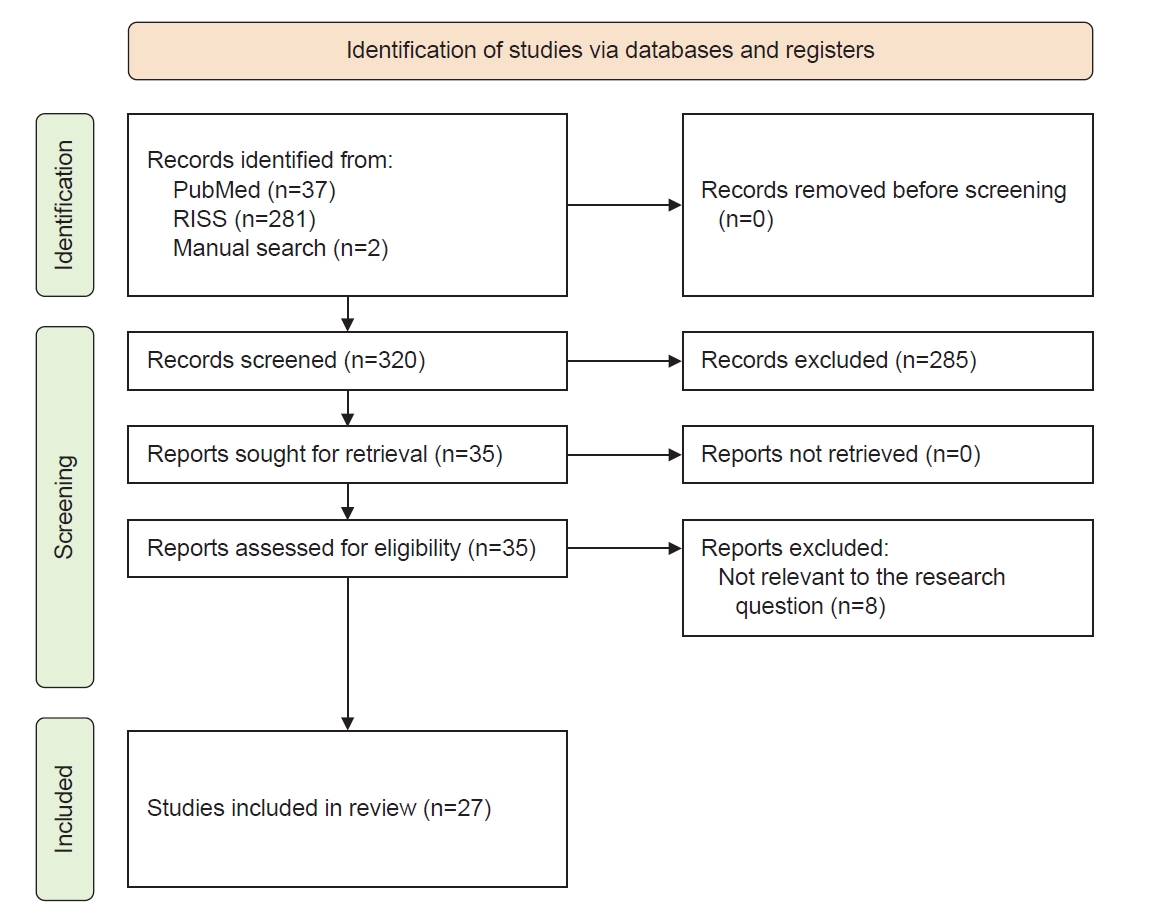
| Author (year) | Database | Data name | Study type | No. of subjects | Sex of subjects | Age of subjects (yr) | NCDs | Outcomes | Implication |
|---|---|---|---|---|---|---|---|---|---|
| Lee and Lee (2016) [16] | RISS | KNHANES 2014 | CS | 6,266 | M (43%) | ≥10 | Obesity | Associations between food labeling use and women, age, income, education level, weight control and subjective obesity were observed. | Nutrition education, including food selection and body image correction, should be provided to obese people who do not use food labeling. |
| F (57%) | |||||||||
| Choi and Kim (2020) [15] | PubMed/ MEDLINE | KNHANES 2016 | CS | 1,443 | Postmenopausal women | ≥40 | Obesity | Lower recognition of nutrition labeling (3.6%) was observed in postmenopausal women with abdominal obesity. | Nutrition intervention programs are required to increase nutrition labeling recognition rates in abdominally obese menopausal women. |
| Lee and Shin (2021) [13] | PubMed/ MEDLINE | KCHS 2015–2017 | CS | 642,677 | M (42.2%) | ≥19 | Obesity, hypertension, and diabetes | An association of low nutrition labeling use with risk of obesity, hypertension, and diabetes was observed in subjects living alone in rural areas. | Various regional nutrition policies are implemented to reduce regional health gaps among single-person households. |
| F (57.8%) | An association between not recognizing nutrition labeling and diabetes risk was observed among rural and metropolitan residents. | ||||||||
| Chae and Park (2022) [14] | PubMed/ MEDLINE | KNHANES 2013–2018 | CS | 4,603 | M (45.6%) | 19–29 | Obesity | Nutrition labeling was used less in both men and women who subjectively recognized their bodies as obese. | Nutrition education interventions are needed to promote the use of nutrition labeling based on nutritional knowledge. |
| F (54.4%) | |||||||||
| Kim et al. (2017) [19] | PubMed/ MEDLINE | KNHANES 2007–2009 | CS | 3,869 | M (100%) | ≥20 | MS | A lower risk of MS was observed in male users of nutrition labeling. | Awareness and utilization of nutrition labeling are required for MS management. |
| F (0%) | |||||||||
| Jin et al. (2019) [18] | PubMed/ MEDLINE | KNHANES 2007–2015 | CS | 41,667 | M (46.5%) | ≥20 | MS | Increased MS risk was observed among subjects without nutrition labeling use compared with those with it. | Nutrition labeling education is required for MS management. |
| F (53.5%) | |||||||||
| Cho et al. (2021) [17] | PubMed/ MEDLINE | KNHANES 2016–2018 | CS | 14,490 | M (42.1%) | ≥20 | MS | An increased risk of MS was observed in subjects with unawareness of nutrition labeling compared with subjects using nutrition labels. | Nutrition labeling utilization should be promoted for MS management. |
| F (57.9%) | |||||||||
| Kwak et al. (2022) [20] | RISS | KNHANES 2019 | CS | 4,981 | M (50.8%) | 19–65 | MS | An association between high use of nutrition labeling and lower prevalence of MS was observed. | A nutrition program is required to increase the use rate of nutrition labeling for MS prevention and management. |
| F (49.2%) |
| Author (year) | Database | Data name | Study type | No. of subjects | Sex of subjects | Age of subjects (yr) | NCDs | Outcomes | Implication |
|---|---|---|---|---|---|---|---|---|---|
| Han et al. (2018) [26] | PubMed/ MEDLINE | KNHANES 2010–2015 | CS | 26,914 | M (40.9%) | ≥20 | Chronic disease (hypertension, or dyslipidemia, or diabetes) | An association between active use of nutrition labeling and high self-management was observed among subjects with chronic disease. | Food and nutrition policy, including enhanced nutrition labeling, is necessary to support informed food purchasing decisions. |
| F (59.1%) | |||||||||
| Won and Han (2019) [24] | RISS | KNHANES 2013–2015 | CS | 6,185 | M (43%) | 18–65 | Hypertension | The hypertensive group who did not exercise and did not use nutrition labeling consumed more fat and sodium. | It is necessary to expand customized education tailored to the lifestyles of subjects with hypertension. |
| F (57%) | |||||||||
| An et al. (2020) [23] | RISS | KNHANES 2016–2018 | CS | 4,862 | M (30.2%) | ≥19 | Hypertension and diabetes | The effect of nutrition education on nutrition labeling was not significant. | Systematic and specific nutrition education should be conducted according to the target and necessity. |
| F (69.8%) | Subjects with hypertension did not carefully check nutrition labeling. | ||||||||
| Han (2022) [25] | RISS | KCHS 2019 | CS | 925 | M (70.9%) | 40–79 | Hypertension and diabetes | 55.1% of diabetic subjects did not receive diabetes management. | A nutrition program is required for young individuals with diabetes and hypertension. |
| F (29.1%) | 62.7% of diabetic subjects could read nutrition labeling. | ||||||||
| Jin et al. (2023) [21] | RISS | KCHS 2018 | CS | 74,283 | M (45%) | ≥19 | Hypertension or diabetes | Higher utilization of nutrition labeling was observed among subjects with experience in walking exercise and in disease management education. | Nutrition labeling education is required as a dietary management tool to select healthy food. |
| F (55%) | |||||||||
| Park (2025) [22] | RISS | KNHANES 2023 | CS | 5,293 | M (43.2%) | ≥30 | Hypertension | Associations were observed between nutrition labeling awareness and breakfast frequency, walking days, and muscle strength days. | Nutrition labeling utilization can contribute to NCD prevention. |
| F (56.8%) | An inverse association between awareness of nutrition labeling and hypertension incidence was observed. | ||||||||
| Kim et al. (2016) [27] | PubMed/ MEDLINE | KNHANES 2010–2014 | CS | 17,687 | M (41.6%) | ≥30 | Dyslipidemia | Low TC, low TG, high HDL-C, and low LDL-C were observed among subjects with high nutrition labeling awareness. | Food and nutrition policy for high nutrition labeling awareness is required for dyslipidemia management. |
| F (58.4%) | Lower dyslipidemia diagnosis was observed in subjects with a higher awareness of nutrition labeling compared with those who did not. | ||||||||
| Kye et al. (2020) [28] | PubMed/ MEDLINE | KNHANES 2013–2018 | CS | 16,619 | M (49.5%) | ≥19 | Dyslipidemia | High HDL-C and low TG levels were observed in subjects who correctly recognized their body image when they actively used nutrition labeling. | Tailored intervention strategies considering individual body-size perception are required. |
| F (50.5%) | |||||||||
| Han et al. (2018) [34] | PubMed/ MEDLINE | KNHANES 2015 | CS | 2,931 | M (43.7%) | ≥30 | IR | Lower HOMA-IR scores were associated with the use of nutrition labeling. | High levels of nutrition labeling awareness and utilization are required for T2DM management. |
| F (56.3%) | |||||||||
| Joo et al. (2020) [32] | PubMed/ MEDLINE | KNHANES 2016–2017 | CS | 487 | M (56.3%) | ≥30 | Diabetes | An association between renal function loss and food labeling unawareness was observed only in men with diabetes was observed. | Nutrition education interventions are required to increase food labeling awareness in men with diabetes. |
| F (43.7%) | An association between renal function loss and food labeling unawareness in socially isolated men with diabetes. | ||||||||
| Kim and Lee (2020) [33] | RISS | KCHS 2018 | CS | 20,113 | M (50.3%) | 40–79 | Diabetes | The duration of diabetes did not affect the utilization of nutrition labeling. | Education is required for diabetes management. |
| F (49.7%) | |||||||||
| Lee et al. (2023) [29] | PubMed/ MEDLINE | KNHANES 2016–2018 | CS | 1,587 | M (47.7%) | ≥30 | Diabetes | Subjects with diabetes had less than 50% utilization of nutrition labeling. | People with diabetes need a strategy to manage a healthy diet by using nutrition labeling. |
| F (52.3%) | A low proportion of nutrition labeling awareness, use, and effect on food selection was observed in subjects with diabetes aged over 65 years. | ||||||||
| Jeong and Shon (2024) [31] | RISS | KNHANES 2019–2021 | CS | 1,422 | M (48.9%) | ≥30 | Diabetes | Proper food selection and dietary habits, as indicated by nutrition labeling, were associated with better blood glucose control in diabetic patients. | Food policy is needed to increase the use of nutrition labeling among people with diabetes. |
| F (51.1%) | |||||||||
| Lee et al. (2025) [30] | RISS | KNHANES 2019–2021 | CS | 2,284 | M (48.9%) | ≥19 | Diabetes | The prevalence of chronic kidney disease was lower among those who used nutrition labeling than among those who did not. | Health education is required for diabetics to manage their diet using nutrition labeling. |
| F (51.1%) |
| Author (year) | Database | Data name | Study type | No. of subjects | Sex of subjects | Age of subjects (yr) | NCDs | Outcomes | Implication |
|---|---|---|---|---|---|---|---|---|---|
| Yoo et al. (2019) [35] | PubMed/ MEDLINE | KNHANES 2010–2016 | CS | 25,156 | M (56.3%) | ≥30 | Cancer | Increased HDL-C levels were observed among cancer survivors with nutrition labeling awareness compared with those without. | Nutrition labeling promotion programs are required for cancer survivors. |
| F (43.7%) | |||||||||
| Choi et al. (2023) [36] | RISS | KNHANES 2019–2021 | CS | 552 | M (37%) | ≥20 | Cancer | The more women, city dwellers, high-income people, and highly educated people there were, the more nutrition labeling was used. | Education on nutrition labeling is required for people who experience cancer, and appropriate interventions are needed to ensure that the use of nutrition labeling continues for a long time, even after a cancer diagnosis. |
| F (63%) | Subjects who checked nutrition labeling showed higher intakes of fat and dietary fiber and lower intakes of carbohydrates. This trend was significantly observed in cases of less than 5 years of cancer diagnosis, but not in cases of more than 5 years of cancer diagnosis. | ||||||||
| Park et al. (2022) [37] | RISS | KNHANES 2015–2019 | CS | 18,129 | M (41.4%) | ≥40 | Stroke | Young, female, high-income, highly educated, and regular exercise subjects were more likely to be affected by nutrition labeling. | This study suggests the association between nutrition labeling and stroke prevalence in men and older adults. |
| F (58.6%) | The prevalence of stroke was higher in older, male, low-income, and low-educated subjects. | ||||||||
| The prevalence of stroke was 0.388 times lower in men who recognized nutrition labeling than in men who did not recognize nutrition labeling. | |||||||||
| The prevalence of stroke was 0.27 times lower among subjects aged 70 years or older who recognized nutrition labeling. | |||||||||
| Kwon and Kim (2020) [38] | PubMed/ MEDLINE | KNHANES 2013–2015 | CS | 13,505 | M (40.6%) | ≥19 | Atopic dermatitis | An association between awareness of nutrition labeling and the prevalence of atopic dermatitis was observed among women. | Nutrition education, including nutrition labeling and diet, is required for women with atopic dermatitis. |
| F (59.4%) | |||||||||
| Kim et al. (2022) [39] | PubMed/ MEDLINE | KNHANES 2008–2019 | CS | 32,080 | M (71.1%) | ≥20 | CKD | An association between awareness and use of nutrition labeling and decreased risk of CKD was observed. | A strategy for people with CKD is required to manage a healthy diet by utilizing nutrition labeling. |
| F (28.9%) | There is a strong inverse association between the use of nutrition labeling and the risk of CKD in the older subjects. |
NCDs, non-communicable diseases; KNHANES, Korea National Health and Nutrition Examination Survey; CS, cross-sectional; M, male; F, female; KCHS, Korea Community Health Survey; MS, metabolic syndrome.
NCDs, non-communicable diseases; KNHANES, Korea National Health and Nutrition Examination Survey; CS, cross-sectional; M, male; F, female; KCHS, Korea Community Health Survey; TC, total cholesterol; TG, triglycerides; HDL-C, high-density lipoprotein-cholesterol; LDL-C, low-density lipoprotein-cholesterol; IR, insulin resistance; HOMA-IR, homeostatic model assessment of insulin resistance; T2DM, type 2 diabetes mellitus.
NCDs, non-communicable diseases; CKD, chronic kidney disease; KNHANES, Korea National Health and Nutrition Examination Survey; CS, cross-sectional; M, male; F, female; HDL-C, high-density lipoprotein-cholesterol.